
Finding Residents Across Elgin
Begin with the kind of detail in hand. A street address belongs in an assessor search, while a full name can go to an owner index, court index, or voter self-lookup. An older address calls for a printed city directory or deed index. This order matters in Elgin because the city extends into both Kane and Cook Counties. The county of the parcel, event, court case, or registration decides which custodian has the record.
No official roll lists every person in a household. Assessment files name owners, not all occupants. Voter tools cover registered voters and disclose only limited information. Deeds identify parties to recorded transactions. Historical volumes may include adults at an address, yet omit some residents. The sound method is to treat each result as one piece of evidence and match names, addresses, dates, and jurisdictions across sources.
- Place the address in Kane or Cook County with an official city or county map.
- Search the correct assessor by owner name, PIN, or street address.
- Use the relevant county voter tool only for its permitted verification purpose.
- Check the recorder index or historical directory when the question reaches back in time.
- Ask the custodian, library, or archives when the needed index is not online.
Elgin Residents Directory Offices
Elgin has no single resident-records counter. Kane County keeps most local filings, while Cook County serves the part of the city east of the county line. The recorder or recording division handles deeds and document indexes. Assessors connect parcels with owner and mailing data. County clerks handle elections and vital records, and circuit clerks keep court indexes. The City Clerk routes municipal records and requests under the Illinois Freedom of Information Act. For an address-first method, use the Elgin street directory guide.
Kane County Recorder
719 S. Batavia Avenue, Building C
Geneva, IL 60134
630-232-5935
Kane County Assessment Office
719 S. Batavia Avenue, Building C
Geneva, IL 60134
630-208-3818
Kane County Clerk Elections
719 S. Batavia Avenue, Building B
Geneva, IL 60134
630-232-5990
Kane DevNet Finds Elgin Owners
Kane County's DevNet Wedge is the strongest first stop for most Elgin parcels. Its owner search accepts last name, first name, house number, street name, sale date, sale amount, property class, township, and tax year. Results can be narrowed to Elgin Township or a tax district. The public property card may show the PIN, owner, taxpayer mailing address, property address, legal description, assessment history, sale history, and tax history.
Mailing and property addresses are not the same thing. A taxpayer may receive mail elsewhere, and the situs address identifies the parcel rather than every person who lives there. The site exposes current and historical tax years, but the research notes that its year-by-year tax history reaches back to 2004, not to the first deed.
| DevNet field | Best use |
|---|---|
| Owner name | Locate parcels tied to a named owner |
| House and street | Resolve one address to a PIN |
| Township or tax district | Keep the result within the Elgin area |
| Sale date and amount | Find a transfer window for deed research |
The Kane County Clerk gateway shows where election, vital, and clerk services fit beside property research.
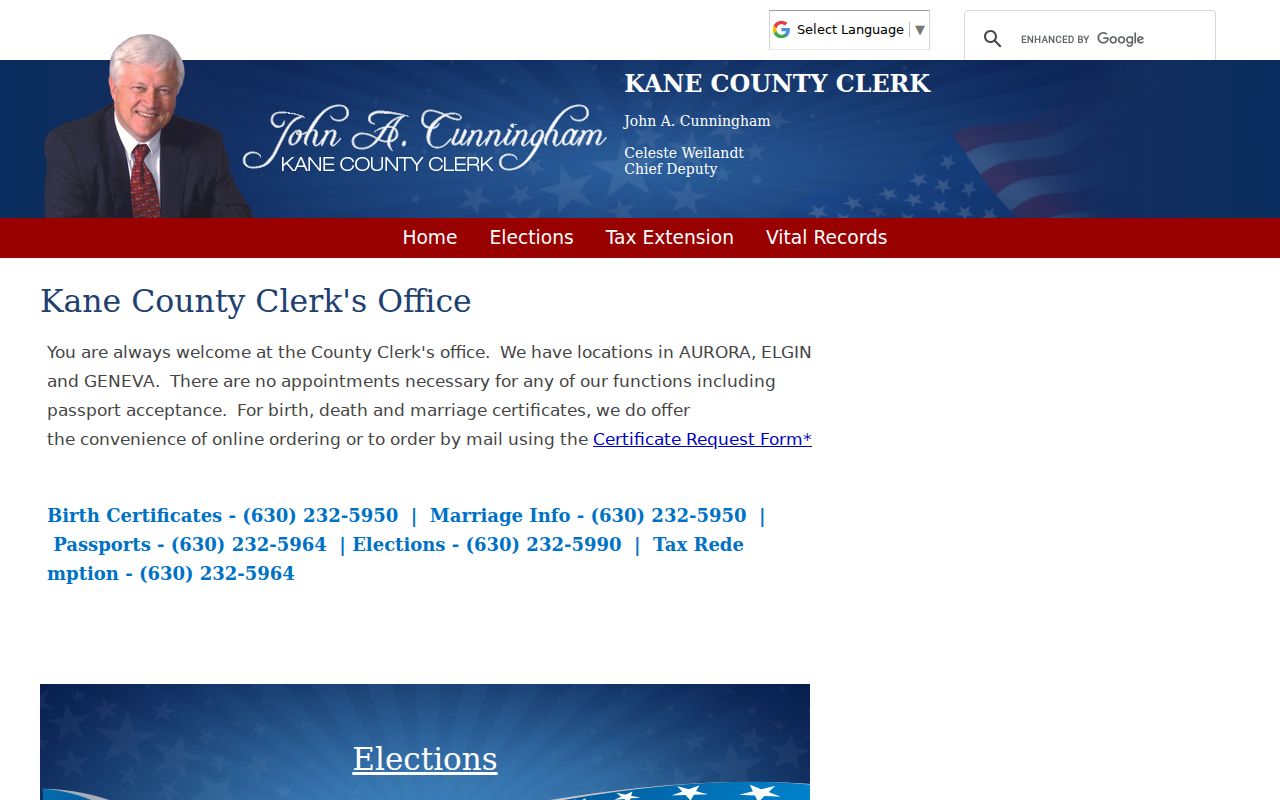
That official county gateway helps distinguish an assessor result from a clerk-held record or certificate.
Current Elgin Residents Directory Sources
Modern directory work is a comparison of limited official indexes. Each source answers a narrow question, and each leaves people out. Use free official portals first. If an online index fails, call the office, visit a public terminal, send the listed request form, or use an Illinois FOIA request for an existing municipal record that is not exempt.
| Source | Who It Lists | Keeper | Access |
|---|---|---|---|
| Kane DevNet | Parcel owners and taxpayers | Kane assessment offices | Free portal |
| Cook Property Search | Owners in Cook County Elgin | Cook County Assessor | Free portal |
| Kane Voter Search | A registrant checking a record | Kane County Clerk | Limited online lookup |
| Kane Land Records | Parties to recorded documents | Kane County Recorder | Online index and office |
| City permit search | Names tied to permit files | City of Elgin | Address search and records request |
A portal result is an index or public summary, not proof that a person lives at the site today. Match the owner name and PIN, then use recording dates or another official index to confirm the time frame. The Elgin resident lookup workflow explains how to test one person's identity without treating a single match as final.
Elgin's Two-County Records Split
The Kane-Cook boundary is the key geography behind the Elgin residents directory. Most of Elgin lies in Kane County, but part sits in Cook County. A city mailing address does not settle which office holds a deed, vital event, court case, or voter record. City boundary and annexation maps can orient the search, while a county parcel viewer confirms the government stack that applies.
Cook has a notable records quirk. Its Recorder of Deeds was consolidated into the Cook County Clerk on December 7, 2020. Recorded-document searches and copy requests therefore run through the Clerk's recordings operation. Cook assessment tools also distinguish the property's location from a legal or postal mailing address. That distinction keeps a search from assigning an owner to the wrong place.
The City of Elgin government overview makes the county split visible.
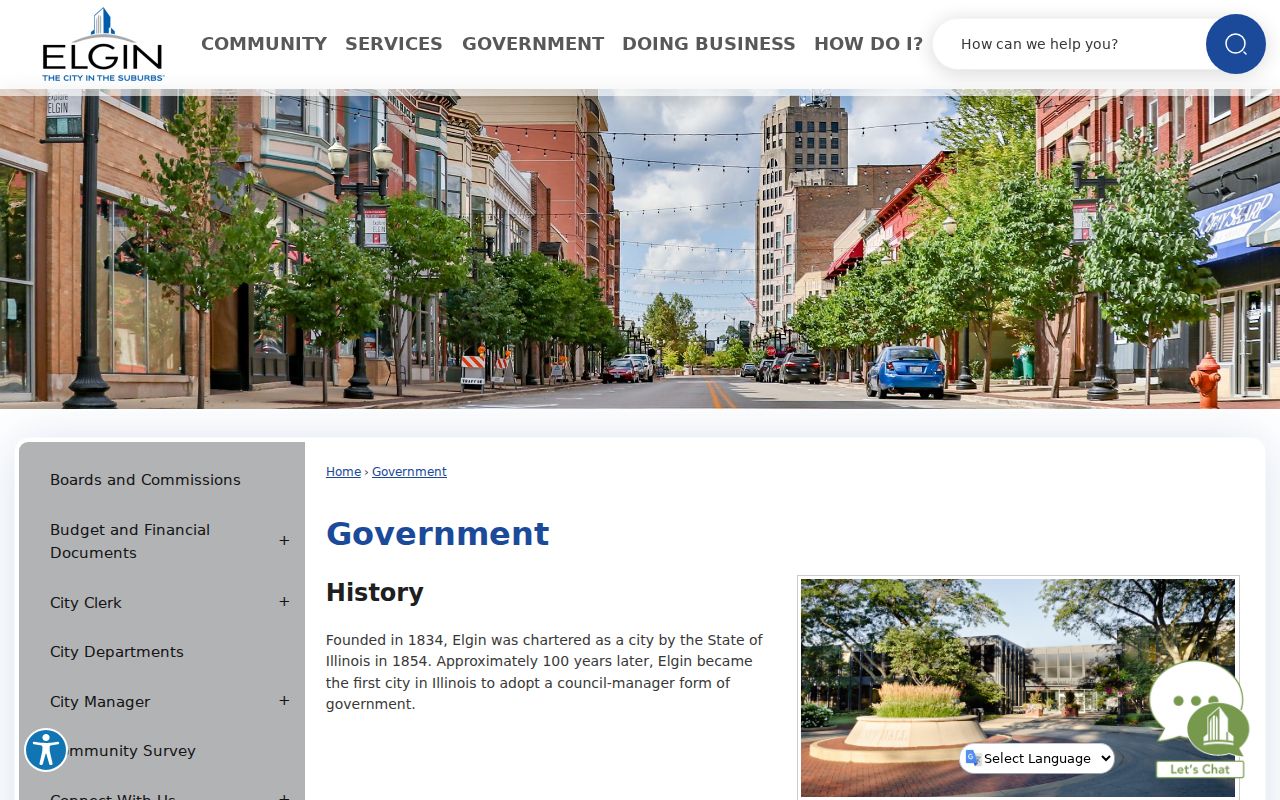
This city source is the safest first check before moving to either county's custodian.
The Cook County Clerk gateway is the counterpart for clerk, election, vital, and recording services on the Cook side.
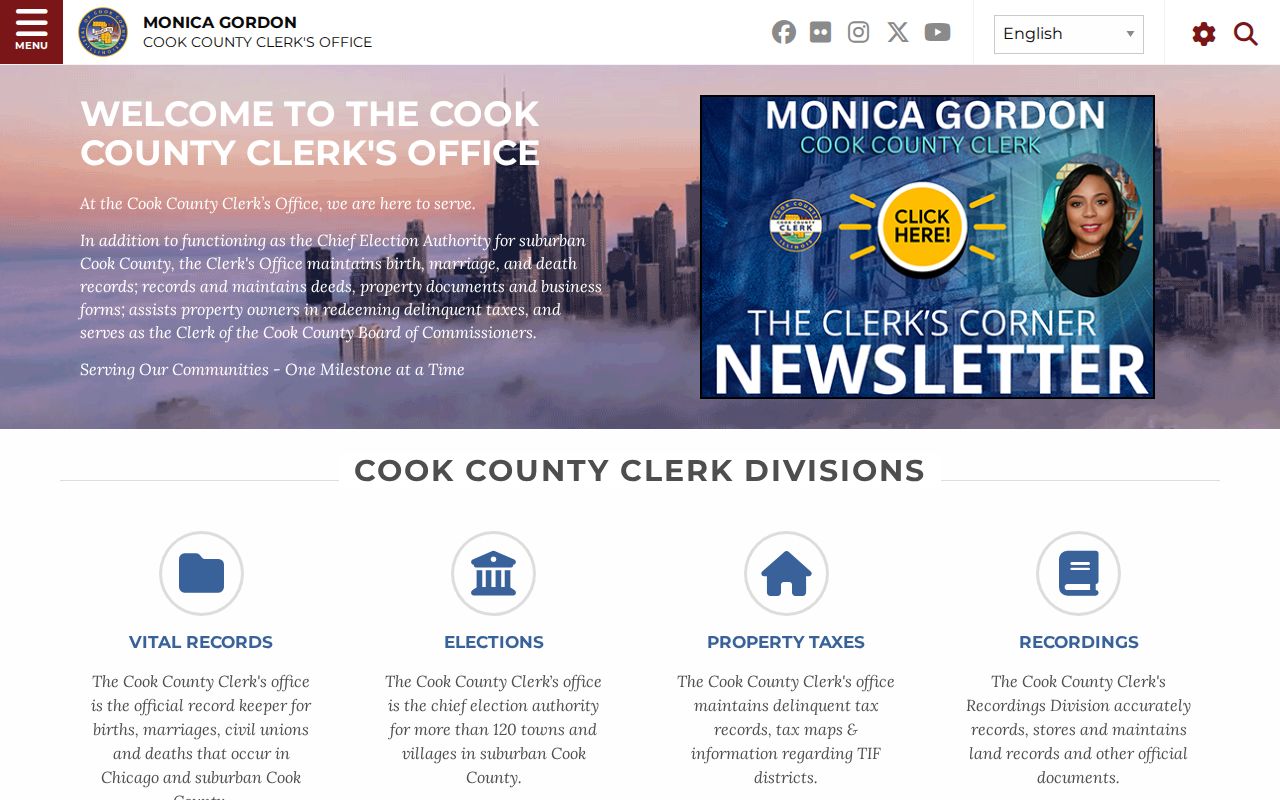
The separate county gateway confirms why a citywide search cannot stop with Kane sources.
Illinois Voter Records in Elgin
Kane Voter Search asks for a last name, first name, street number, street name, and date of birth. It is built for a voter to verify registration and polling details. Cook County uses its own voter-information workflow. Illinois permits a limited and redacted voter list for authorized list-maintenance purposes, while restricting copying, transmission, commercial use, and harassment.
That means a voter tool is not a public household roster. Protected information and other identifiers do not become fair game because a person is registered. If a record is wrong, the right response is to contact the county elections office rather than repeat the data elsewhere.
Elgin Deeds Reach Back to 1837
Kane County's permanent property archive begins in 1837. Its online land-records search and office indexes let a researcher move from a current parcel to older deeds through grantor and grantee names, recording dates, document numbers, book and page references, tract details, and legal descriptions. Some older material may require the recorder's office, historical media, or staff help rather than a web image.
A deed shows ownership and a recorded transaction. It does not list each occupant. Pair its dates with assessment cards, old city directories, census schedules, probate files, or obituaries when the goal is to identify residents. Kane also offers Property Watch for alerts tied to recorded documents, a useful consumer-safety tool that does not change ownership or block a filing.
Elgin FOIA Fills Portal Gaps
The City Clerk serves as the routing desk for municipal files. Elgin's online permit search covers permits by address, and police records may be requested by location. If a city record exists but is not posted, the Illinois Freedom of Information Act, 5 ILCS 140, supplies the request route. A request should name the department, address, date range, and record type as closely as possible.
FOIA does not force an office to create a new resident list, answer a research question, or disclose exempt private data. The city can provide existing nonexempt records in its custody. County agencies maintain their own FOIA contacts. For court files, deeds, certificates, and election records, use the specialized clerk or recorder process first because those systems have distinct access rules.
The Elgin public-records request page explains the municipal channel.
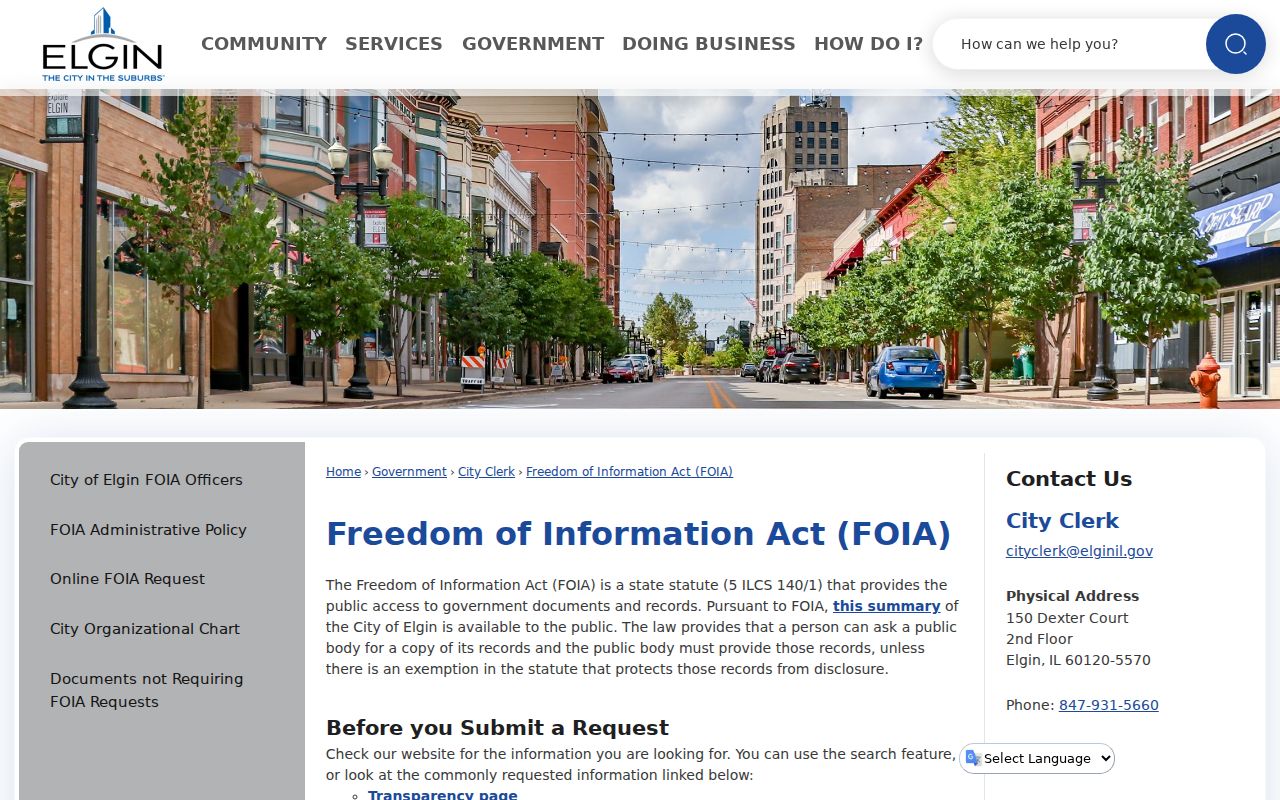
This fallback is most useful after identifying the exact record that an online portal does not expose.
Elgin Maps Explain Resident Records
Elgin publishes city boundary, annexation, historic district, street, census, zoning, library, school, and tax-increment maps. These layers help answer a basic question before any resident lookup: which jurisdiction would have created the record? Annexation can move a site into the city without changing its county, while postal labels and city limits may not align.
County GIS remains the parcel authority for this workflow. KaneGIS4 can search addresses, parcels, subdivisions, condo indexes, aerials, and tax maps. CookViewer supplies the Cook-side counterpart and preserves annual parcel layers. These viewers are research aids, not legal surveys. Confirm legal boundaries and descriptions through the relevant custodian.
The Elgin maps and GIS page gathers the city layers.
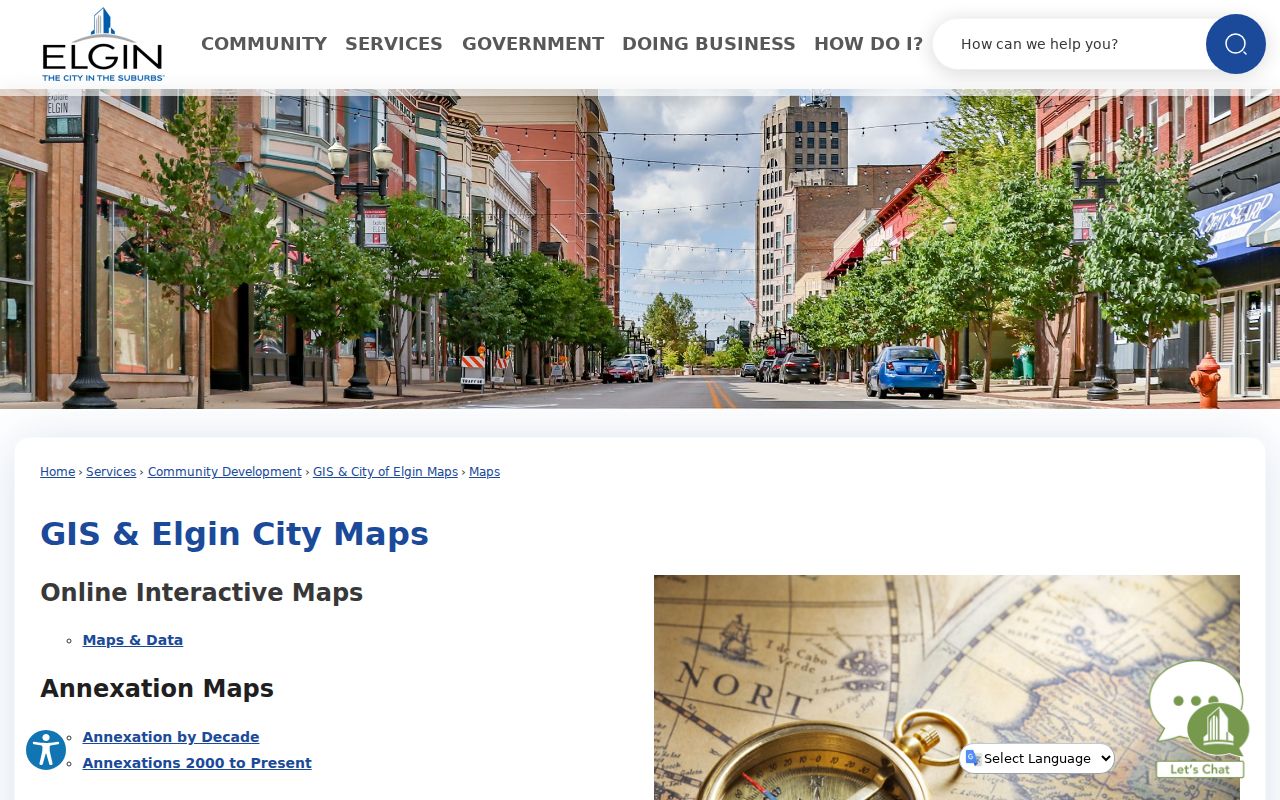
The map menu makes the city, county, and postal distinctions easier to test before opening a records portal.
Elgin Vital and Court Indexes
Vital records follow the county of the event. Kane County Clerk holds local birth, death, marriage, and civil-union records, while Cook County Clerk handles events in Cook. Illinois historical inspection generally opens birth records at 100 years, death records at 50 years, and marriage records at 75 years under 410 ILCS 535/24. Certified-copy eligibility and fees are separate from historical access.
Court records also split by county. Kane County Circuit Clerk offers an online court portal and date search. Cook County Clerk of the Circuit Court uses its Odyssey system. A name result can show a case number, party role, filing date, case type, status, events, or dispositions, but names alone are not enough to identify a person. Check the county, dates, middle name, address evidence, and case details.
Historical Elgin Residents Directory Shelves
Gail Borden Public Library's genealogy collection is the main shelf for older Elgin residents directory work. It holds city directories, census resources, newspapers, obituaries, maps, and other local-history tools, with staff and in-person access when a volume is not online. Elgin History Museum adds an 1892 city directory search and a historical building lookup. Elgin Genealogical Society resources, church records, funeral-home material, yearbooks, and local newspaper indexes can fill gaps.
Printed city directories may list a name, spouse, occupation, employer, street address, and whether the entry is a householder. Later criss-cross volumes reverse the order so an address leads to a name. Neither format proves continuous residence. Compare neighboring years and pair a directory date with the closest available census, deed, obituary, or property record. Full collection years and reading methods appear in the City Directories section.
The Gail Borden genealogy gateway shows the library route.
Safe at Home Protects Elgin Addresses
Illinois's Address Confidentiality Program, commonly called Safe at Home, can provide a substitute address for eligible survivors when new public records are created. The Illinois Attorney General administers it. The program helps reduce exposure, but it does not automatically remove old public documents or guarantee that every property record will be confidential.
This limit belongs in every careful residents directory search. An absent address may reflect a lawful protection, a redaction, a delayed update, or a source that never collected occupants. Do not try to defeat those safeguards. Verify ordinary record questions with the custodian and respect the boundary between public access and harmful use.
Elgin Records Change With Time
A current search and a historical search need different standards. Kane DevNet can show a present parcel owner and selected tax history, while the recorder's archive reaches much farther back. A city directory fixes a household to one publication year. A court index fixes a filing to a case date. None of those entries should be carried forward without a newer source. Record the date shown by the custodian, the date the portal was checked, and the exact spelling used in the query.
Local events also explain gaps and changes. Kane's 1843 courthouse fire damaged early material, and a March 1890 fire destroyed about 5,000 court files even though record volumes survived. Elgin changed street numbers in the 1870s, 1884, and 1894. Main became State, Dexter became National, Mill became Douglas, and Railway became Wellington. A failed old-address search may therefore reflect a changed label or a lost file rather than a person who never lived there.
When the online trail stops, switch channels. Gail Borden Public Library offers genealogy resources, microfilm, maps, newspapers, directories, and research help. Elgin History Museum maintains building and directory searches. IRAD preserves selected local government and court materials. Recorder and clerk counters, phone help, mail forms, and public terminals can expose indexes or copies that a web portal does not. Write down each channel checked so another researcher can repeat the work.